How to Add More Horsepower to Your Muscle Car
How do you add more Horsepower?
It's the question every car enthusiast asks at some point. We always want more power. More grunt off the line. More confidence at highway speeds. More of whatever made you want the car in the first place.
The good news is there's no shortage of ways add more horsepower to your ride. The important thing is doing it in the right order, because the guys who end up with the best results aren't the ones who moved fastest. They're the ones who thought it through and planned correctly.
Here's how to approach it.
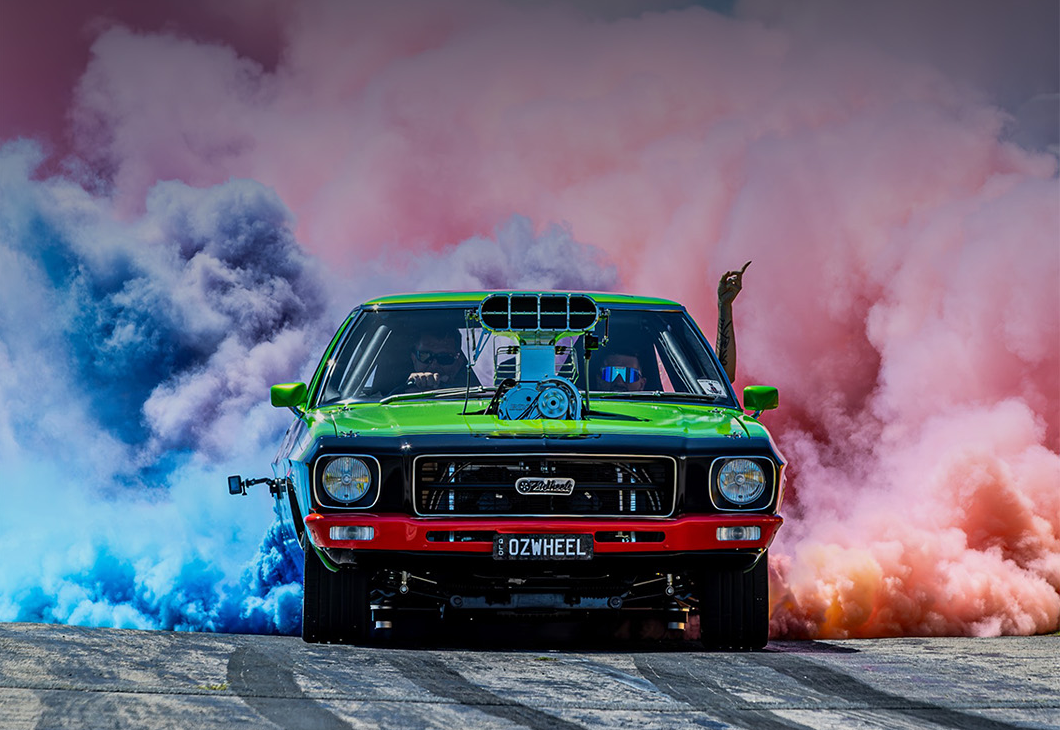
Step 1: It Starts with the Engine
Before anything else, you need to know what you're working with or working towards.
If you already have your engine, that's great. You have a known output, known torque characteristics, and a clear picture of what the rest of the build needs to support. If you're still deciding, this is a big decision. The engine sets the personality of the car and every other decision flows from it including how much power you can ultimately chase.
Not sure whether to go crate or turnkey? We've covered that in detail. A crate engine gives you full control and hands-on involvement at every stage. A turnkey unit comes fully dressed, dyno-tested and ready to drop straight in. (We specialise in these) Both are good options, but the right choice depends on your build, your timeline and how you want to spend your time in the shed.
Read our full guide: Crate Engines vs Turnkey 101 →
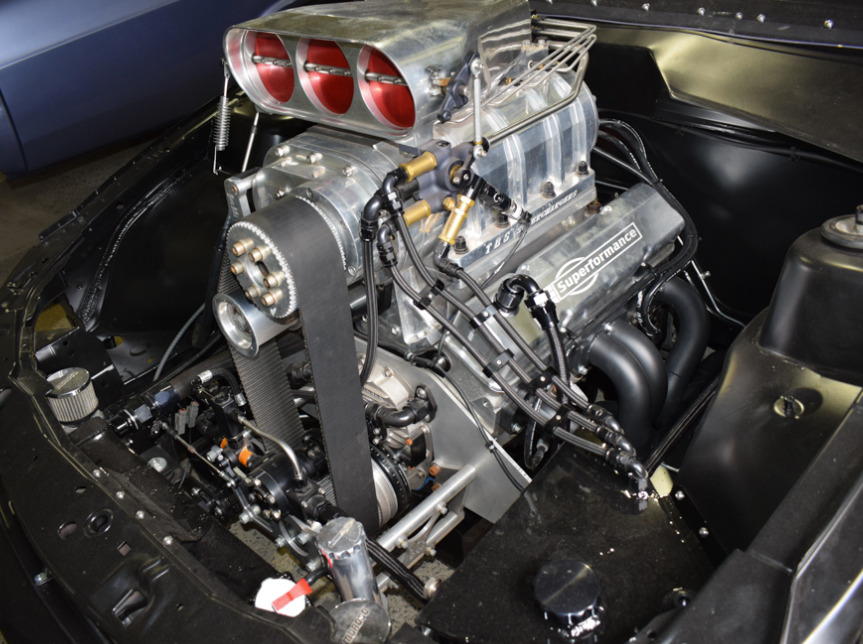
Step 2: Consider Your Differential and Build a Driveline That Can Handle It
This is the step most people skip. And it's the one that costs the most when it goes wrong.
Once the engine is decided, the entire driveline needs to be built to match.
Here's why. Every kilowatt and every newton metre of torque your engine produces has to pass through the transmission and differential before it reaches the road. A stock or off-the-shelf diff was engineered for stock or near-stock power levels. The moment you start pushing beyond that with a power-adder, you're asking a component to handle a load it was never designed for. It will tell you. Usually at the worst possible moment, and usually after you've already spent serious money.
Transmission
Your gearbox is the first thing downstream of the engine. Whether you're running a manual or an auto, a stock or lightly modified transmission won't survive behind serious power for long. Gear selection, torque capacity, converter spec if you're running an automatic, shift firmness, all of these need to reflect your power target and how you intend to drive the car. Getting this wrong is just as expensive as getting the diff wrong, and the two work together as a package. Sort both at the same time rather than treating them as separate decisions.
At Superformance we can help source the right transmission for your combination matched to your engine output, your diff spec and your intended use.
Differential
If the transmission is the first decision in the driveline, the differential is the most overlooked. Builders go straight to the power-adder, straight to the supercharger or the turbo kit and the diff gets treated as something to sort out later. Later always costs more.
The right diff for your build isn't just any performance differential off the shelf either. Carrier selection, gear ratios, spline count, housing strength, axle configuration, all of these need to be matched to your specific combination. Your engine output, your vehicle weight, your tyre setup, your intended use. A diff that's right for a mildly built small block street car is a completely different spec to one living behind a boosted big block making serious power.
A custom built differential removes the guesswork entirely. It's engineered for your exact application, not pulled off a shelf and hoped for the best. It's built specifically for what you're running and what you're planning to run.
At Superformance we custom build differentials in-house to match the exact combination. The result is a driveline that doesn't just survive the power, it works with it, consistently and reliably, every time.
Get the diff sorted. Then go looking for more power.
Step 3: Choose Your Power-Adder
With the engine decided and the driveline built to handle the output, now the real fun starts. There are three main paths to serious power on a muscle car, and each one has its own character, its own trade-offs, and its own place in a build.
Supercharger
For a muscle car, a supercharger is the most natural fit. Belt-driven off the engine, it delivers boost immediately with no lag, no waiting, just instant torque the moment you open the throttle. The power is broad and linear, the installation is straightforward, and a blower sitting on a big block looks exactly like it should. For a street-driven or weekend build where driveability matters as much as peak numbers, it's hard to argue with.
Turbos
A turbo setup will extract more peak power from an equivalent engine than a supercharger but it asks more in return. Exhaust routing, intercooling, wastegate setup, fuelling, tuning, the variables multiply and each one matters. The power builds with revs before it arrives, and when it does, it arrives hard. For the builder chasing maximum output who's prepared to put the work in, a turbo build is the answer.
Nitrous
Nitrous gets a harder reputation than it deserves. On a prepared engine with the right tune and the right fuelling, a properly spec'd nitrous system is one of the most cost-effective ways to add serious, repeatable power on demand. The hit is immediate, the system is tuneable, and when you don't need it it isn't costing you anything. The key word is "prepared," nitrous amplifies everything happening inside your engine, good and bad.
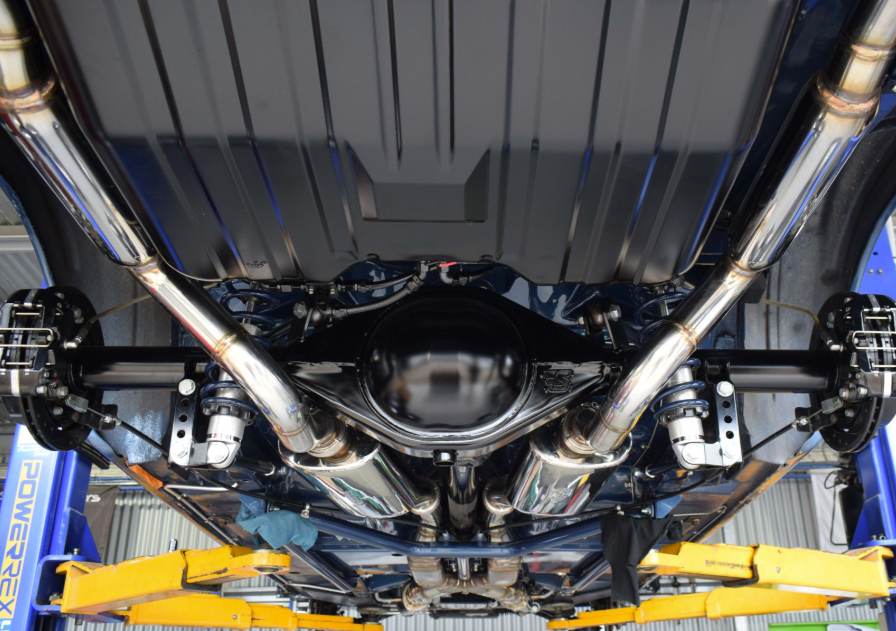
Step 4: Get the Tune Right
Whichever path you choose, the tune is not optional. It's not the last thing to think about and it's not a cost to minimise.
Every power-adder changes your fuel and air equation. More boost means more fuel demand. More fuel demand means your injectors, fuel pump and regulator need to keep up. And all of it needs to be tuned correctly for your specific combination not mapped off a generic base tune from someone else's build.
If you want to talk through your combination, what engine you're running, what power you're chasing, what your diff needs to look like to handle it, the team at Superformance has been building serious performance combinations since 1978. We'll give you a straight answer and help you put together a package that actually works.